
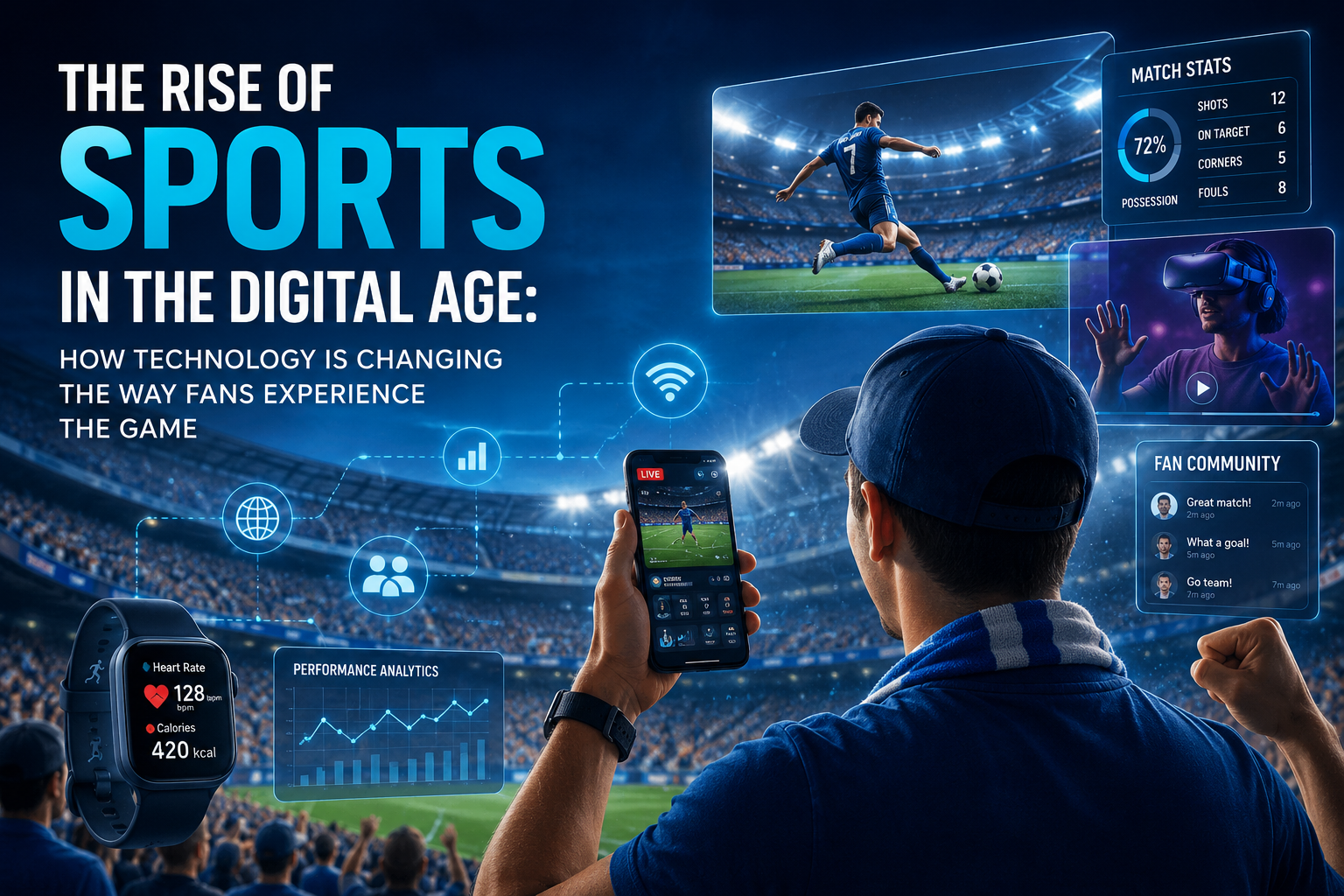
Sports have always been a powerful source of entertainment, inspiration, and community. From local competitions to international tournaments, sporting events bring people together through shared excitement, competition, teamwork, and passion. Over the years, the sports industry has evolved alongside society, and technology has become one of the most influential forces shaping this transformation.
Today, sports are no longer limited to what happens inside a stadium or on a television screen. Fans can follow live scores on smartphones, watch matches through digital platforms, interact with athletes on social media, analyze statistics, participate in fantasy sports, and access behind-the-scenes content from almost anywhere.
Technology has changed not only how fans watch sports but also how athletes train, how teams make decisions, how events are organized, and how sports organizations communicate with their audiences.
The Digital Transformation of Sports
The connection between sports and technology has grown significantly over the past decade. Digital platforms have created new opportunities for fans, athletes, coaches, broadcasters, and sports organizations.
Sports Are More Accessible Than Ever
In the past, fans often depended on television broadcasts, newspapers, radio, or physical attendance to follow sporting events.
Today, smartphones and internet-connected devices allow fans to stay updated throughout the day. Live scores, match updates, player statistics, interviews, highlights, and analysis can be accessed within seconds.
This accessibility has helped sports become more connected to audiences across different regions and countries.
Fans Can Follow Multiple Sports
Digital platforms have also expanded the variety of sports that audiences can discover.
A fan who primarily follows cricket, for example, can easily explore football, tennis, basketball, athletics, motorsports, or other competitions through online platforms.
This broader access can help lesser-known sports reach new audiences.
Social Media Has Changed Fan Engagement
Social media has created a direct communication channel between sports personalities and their fans.
Athletes, teams, leagues, and sporting organizations can publish updates without depending entirely on traditional media.
Athletes Can Build Personal Brands
Professional athletes are increasingly using social media to share training routines, achievements, travel experiences, interviews, personal interests, and moments from their careers.
This allows fans to see aspects of an athlete's life that may not appear during a match.
A strong digital presence can also help athletes build personal brands and connect with audiences beyond their sporting performances.
Real-Time Conversations Increase Engagement
During major matches and tournaments, fans can discuss events in real time through social platforms.
A single moment in a match can quickly become a major online discussion, with supporters sharing reactions, analysis, images, and videos.
This creates a digital community around the sporting event.
Technology Is Improving Athlete Performance
Technology is also changing what happens behind the scenes.
Modern athletes and teams can use data and specialized equipment to understand performance in greater detail.
Performance Tracking
Wearable devices and sports technologies can help collect information related to movement, speed, workload, and other performance indicators.
Coaches and sports professionals can analyze such information to understand training patterns and make informed decisions.
Video Analysis
Video technology has become an important part of sports training.
Athletes and coaches can review performances to identify strengths and areas that require improvement.
A detailed review can help players understand positioning, movement, technique, timing, and decision-making.
Data Analytics Is Transforming Sports Strategy
Sports have always involved strategy, but data analytics has introduced new ways to evaluate performance.
Statistics Support Better Decisions
Teams can analyze large amounts of information about players, matches, opponents, and performance patterns.
Coaches can use statistics alongside their experience and observations when developing strategies.
For example, data may help identify how a team performs under specific conditions or which areas require additional attention during training.
Fans Are Becoming More Data-Oriented
Statistics are no longer limited to coaches and professional analysts.
Fans can now access detailed information about players and teams through websites and applications.
This has created a more analytical sports culture in which supporters discuss performances using statistics as well as traditional observations.
Video Technology and Fairness in Sports
Technology has also been introduced to assist officials in making decisions.
Video review systems can allow referees or officials to examine specific moments during a match.
Reviewing Important Decisions
In sports where small decisions can have major consequences, video technology can provide officials with additional information.
The purpose is generally to support accurate decision-making while maintaining the flow and spirit of the game.
Technology Does Not Remove Human Judgment
Even with advanced systems, sports officials continue to play an important role.
Technology provides additional information, but officials must interpret situations according to the rules and circumstances of the game.
The balance between technology and human judgment remains an important part of modern sports management.
Streaming Is Changing Sports Broadcasting
Traditional sports broadcasting has also been transformed by digital streaming.
Fans Can Watch From Different Devices
Instead of watching a match only through a television set, viewers can increasingly use smartphones, tablets, laptops, and smart televisions.
This flexibility allows fans to follow sporting events while traveling or away from home.
Highlights Make Sports More Convenient
Not everyone has time to watch an entire match.
Digital platforms often provide highlights, short clips, replays, and important moments so fans can quickly understand what happened.
This can help sports remain relevant to people with busy schedules.
The Growth of Fantasy Sports
Fantasy sports have created another form of digital engagement.
Participants create virtual teams using real athletes and earn points based on their real-world performances.
Fans Become More Engaged With Player Performance
Fantasy formats encourage participants to follow individual players and statistics more closely.
A person who previously followed only one team may become interested in several teams because players from different teams can be part of a fantasy lineup.
Responsible Participation Matters
Fantasy sports should be approached as entertainment, and participants should understand the rules and financial conditions of any platform they use.
Responsible digital participation is important in every form of online activity.
E-Sports and the Expanding Definition of Sports
Competitive gaming has grown into a major global entertainment industry.
Professional gaming events can attract large audiences both online and in physical venues.
Professional Gaming Requires Skill and Preparation
Competitive gaming involves strategy, teamwork, communication, concentration, and extensive practice.
Players often train regularly and work with coaches and support teams.
New Career Opportunities
The growth of e-sports has created opportunities beyond professional players.
Commentators, event organizers, streamers, content creators, analysts, coaches, designers, and technology professionals can all contribute to the industry.
Technology Is Improving Stadium Experiences
The sports experience is also changing for people who attend events in person.
Modern stadiums increasingly use digital systems to improve ticketing, navigation, communication, food services, and fan engagement.
Digital Tickets and Cashless Services
Digital tickets can make entry more convenient while reducing dependence on physical paper tickets.
Cashless payment systems can also make purchases faster during large sporting events.
Connected Stadiums
Some stadiums use mobile applications and connected technologies to provide information about seating, transportation, food outlets, merchandise, and event schedules.
These services can help fans navigate large venues more easily.
Sports Content Is Becoming More Diverse
Technology has expanded the types of sports content available to audiences.
Fans can now watch interviews, documentaries, podcasts, training videos, press conferences, analysis programs, behind-the-scenes footage, and short-form videos.
Behind-the-Scenes Content Builds Stronger Connections
Traditional broadcasts generally focus on the competition itself.
Digital content can show preparation, travel, training sessions, team activities, and personal stories.
This can make athletes and teams feel more relatable to their audiences.
Women’s Sports Are Gaining Greater Visibility
Digital media has also created new opportunities for women's sports.
Online platforms can provide additional coverage and visibility for athletes and competitions that may have received less attention through traditional broadcasting.
Greater Visibility Can Inspire Young Athletes
When young people see successful athletes from different backgrounds competing at high levels, they may feel encouraged to participate in sports themselves.
Greater visibility can also help build stronger fan communities around women's competitions.
Challenges in the Digital Sports Era
Although technology provides many benefits, it also creates challenges.
Information Overload
Fans have access to an enormous amount of sports content.
Constant notifications, updates, statistics, opinions, and social media discussions can sometimes become overwhelming.
Fans may need to choose the platforms and information sources that are most useful to them.
Protecting Athlete Privacy
Athletes are public figures, but they still deserve privacy and responsible treatment.
The widespread sharing of personal information, images, and online speculation can create challenges.
Sports organizations, media outlets, and fans all have a role in promoting respectful digital behavior.
The Future of Sports Technology
The relationship between sports and technology is likely to become even stronger.
Artificial intelligence, advanced analytics, wearable devices, immersive viewing, virtual reality, augmented reality, and connected stadium technologies may create new ways for audiences to experience competitions.
Fans may eventually be able to enjoy increasingly personalized sports experiences based on their favorite teams, players, and interests.
At the same time, the core values of sports are unlikely to change.
Competition, teamwork, discipline, determination, preparation, and sportsmanship will continue to define the sporting experience.
Conclusion
Technology has transformed sports from a simple viewing experience into a connected digital ecosystem.
Fans can follow matches in real time, communicate with athletes, explore detailed statistics, watch highlights, participate in online communities, and enjoy sports through multiple devices. Athletes and teams can use technology to improve training, analyze performance, and make more informed decisions.
However, technology should support the spirit of sports rather than overshadow it. Human skill, teamwork, passion, and fair competition remain at the heart of every game.
As technology continues to evolve, sports will likely become even more interactive and accessible. The future may bring new ways to watch, understand, and experience sporting events, but the excitement of seeing athletes challenge themselves and compete will remain timeless.