Education has always been an important part of personal and social development. For generations, classrooms, teachers, textbooks, and educational institutions have played a central role in helping students gain knowledge and develop professional skills. However, the rapid growth of digital technology has introduced new ways of learning that are changing how people access education.
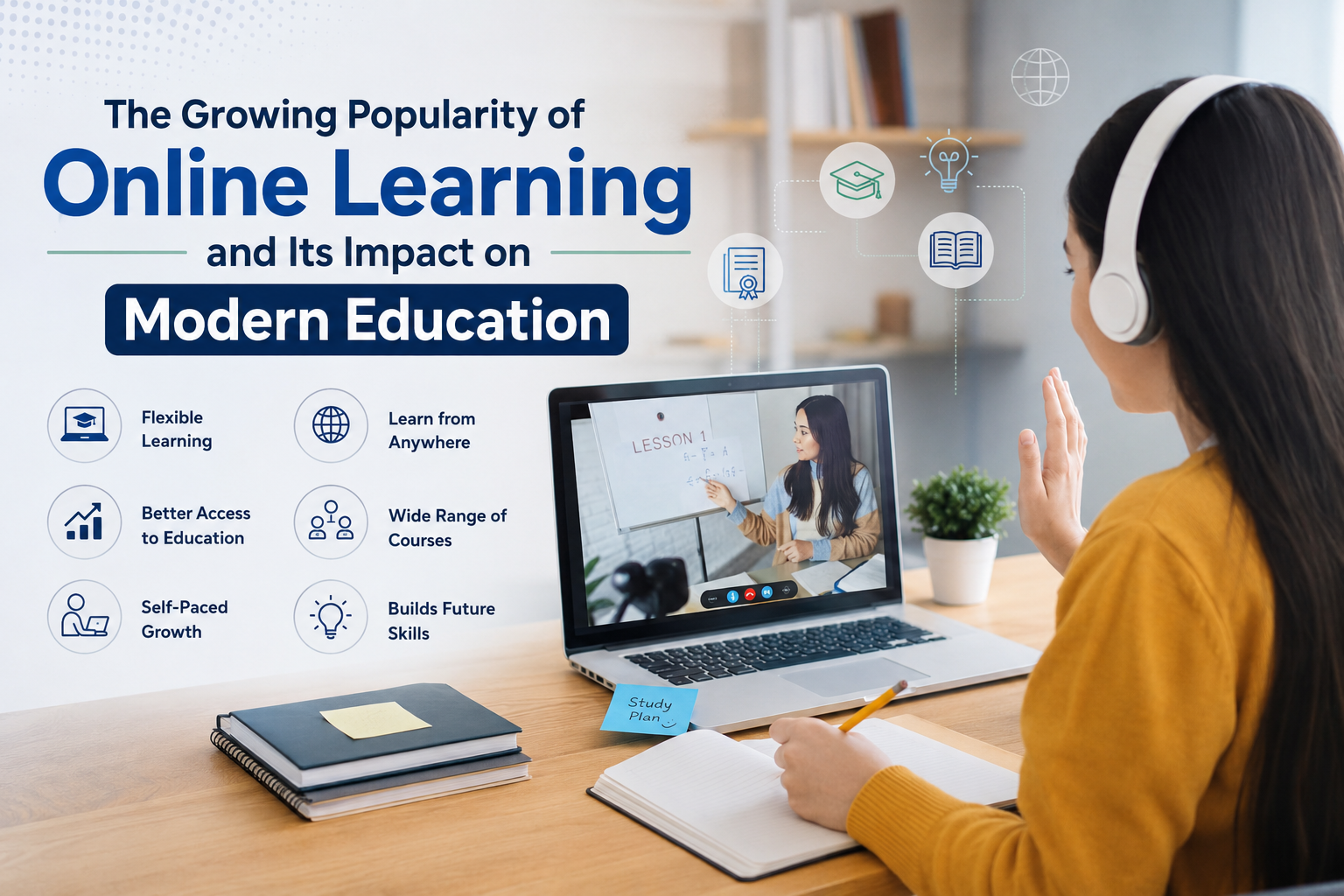
Online learning has become an important part of modern education. Students can now attend virtual classes, watch educational videos, download study materials, participate in online discussions, complete assignments, and learn new skills from almost anywhere. Working professionals can also use online platforms to improve their knowledge without leaving their jobs.
The popularity of online learning increased significantly as digital infrastructure improved, but its usefulness extends beyond temporary changes in education. Today, online learning is becoming a long-term part of the educational ecosystem.
Understanding Online Learning
Online learning refers to educational activities delivered through digital platforms and internet-connected devices.
It can include live classes, recorded lectures, interactive courses, online workshops, digital textbooks, quizzes, assignments, webinars, and virtual discussions.
Flexible Learning Opportunities
One of the biggest advantages of online education is flexibility.
Students do not always need to attend a physical classroom at a fixed location. Depending on the course format, they may be able to learn at home, in a library, or from another suitable environment.
This flexibility can be especially useful for people with different schedules and responsibilities.
Learning From Different Teachers
Online education can connect students with teachers, trainers, instructors, and experts from different locations.
A learner in one city may be able to attend a course taught by an instructor located in another part of the country or even another country.
This expands access to educational expertise.
The Growth of Digital Education
The development of smartphones, affordable internet services, cloud technology, and digital learning platforms has contributed to the growth of online education.
Smartphones Have Made Learning More Accessible
A smartphone can provide access to educational videos, digital books, learning applications, and online classes.
Students who may not have access to a personal computer can sometimes use mobile devices for educational activities.
Recorded Content Provides Flexibility
Recorded lectures allow students to revisit lessons.
If a learner does not understand a topic during the first viewing, they can review the material again.
This can be particularly useful for subjects that require repeated practice and revision.
Online Learning for Students
Students are among the primary users of digital education.
Additional Learning Resources
Online platforms can provide resources beyond traditional textbooks.
Students can explore videos, diagrams, practice questions, simulations, digital libraries, and interactive lessons.
These resources can provide different explanations of the same topic.
Self-Paced Learning
Some online courses allow learners to progress according to their own schedules.
A student who understands a topic quickly can move forward, while someone who needs additional time can review the material again.
Self-paced learning can encourage students to take greater responsibility for their education.
Online Learning for Working Professionals
Education is no longer limited to the early stages of life.
Working professionals increasingly use online learning to develop new skills and improve their career opportunities.
Learning Without Leaving a Job
A professional can take online courses during evenings, weekends, or other available periods.
This makes education more compatible with full-time employment.
Career-Oriented Courses
Online platforms offer courses in areas such as digital marketing, programming, design, management, finance, communication, data analysis, and many other subjects.
Professionals can choose courses based on their career goals and industry requirements.
The Role of Teachers in Digital Education
Technology has changed the learning environment, but teachers remain important.
Teachers Provide Guidance
Educational content can provide information, but teachers help students understand concepts, answer questions, provide feedback, and encourage progress.
A good teacher can also identify where a learner is struggling and suggest appropriate methods for improvement.
Interactive Teaching Improves Engagement
Online classes can include discussions, quizzes, assignments, presentations, polls, and group activities.
These methods can make digital learning more interactive than simply watching recorded videos.
Technology Is Making Learning More Interactive
Modern educational platforms are increasingly using interactive features.
Digital Quizzes and Assessments
Online quizzes can help students test their understanding.
Immediate feedback can show learners which areas require additional attention.
Virtual Simulations
Certain subjects can benefit from simulations that allow students to explore situations digitally.
For example, learners in technical fields may use simulations to understand systems or processes that are difficult to demonstrate in a traditional classroom.
Artificial Intelligence in Education
Artificial intelligence is becoming an increasingly important educational technology.
AI-based tools can assist with personalized learning, question answering, content organization, language support, and educational recommendations.
Personalized Learning Experiences
Different students learn at different speeds.
AI-based systems may help identify learning patterns and recommend resources according to individual needs.
This could make educational experiences more personalized.
AI Should Support Learning
Students should use AI as a learning assistant rather than depending entirely on it.
Developing independent thinking, research skills, creativity, and problem-solving abilities remains essential.
Students should also verify important information and follow the academic policies of their educational institutions.
Online Learning and Accessibility
Digital education can provide learning opportunities to people who face geographical or scheduling limitations.
Learning From Remote Locations
Students living far from major educational centers may be able to access courses through online platforms.
This can reduce some geographical barriers to education.
Support for Different Learning Preferences
Digital education can offer content in different formats, including text, audio, video, diagrams, and interactive activities.
Having multiple formats can help learners choose resources that suit their preferences.
The Importance of Digital Literacy
Online learning works best when students understand how to use digital tools.
Basic Technology Skills
Learners may need to know how to use browsers, video conferencing applications, learning management systems, online documents, email, and digital submission platforms.
These skills can make the learning process smoother.
Online Safety
Students should also understand basic digital safety.
Using strong passwords, protecting personal information, avoiding suspicious links, and accessing educational platforms through trusted sources are important habits.
Challenges of Online Learning
Although online education provides many benefits, it also has limitations.
Lack of Physical Interaction
Traditional classrooms provide face-to-face interaction between students and teachers.
Online learning may sometimes feel less personal, particularly when courses are completely self-paced.
Virtual discussions and live classes can help create a stronger sense of connection.
Distractions at Home
Studying from home can involve distractions from family members, household activities, entertainment, or social media.
Creating a dedicated study space and following a regular schedule can help students remain focused.
Internet and Device Problems
Reliable internet access and suitable devices are important for online education.
Technical problems can interrupt classes or make it difficult to complete assignments.
This remains an important challenge in ensuring equal access to digital education.
Online Learning and Traditional Education
Online learning does not necessarily have to replace traditional classrooms.
Both approaches can complement each other.
Blended Learning
Blended learning combines classroom instruction with digital resources.
Students may attend physical classes while using online videos, assignments, quizzes, and study materials for additional learning.
This approach can provide both personal interaction and digital flexibility.
The Value of Face-to-Face Education
Physical classrooms can provide opportunities for social interaction, teamwork, discussions, practical activities, and direct communication with teachers.
For many subjects, these experiences remain extremely valuable.
The Importance of Practical Learning
Knowledge becomes more useful when students can apply it.
Projects Build Real-World Skills
Online courses can include practical assignments and projects.
For example, a learner studying design may create sample designs, while a marketing student may develop a campaign plan.
Practical projects can help students understand how theoretical concepts work in real situations.
Building a Portfolio
For career-oriented learning, completed projects can become part of a professional portfolio.
A portfolio allows students to demonstrate what they can actually do rather than relying only on certificates.
Online Education and Lifelong Learning
One of the most important effects of digital education is that it encourages lifelong learning.
People no longer need to stop learning after completing formal education.
Learning Can Continue Throughout a Career
Industries change over time.
Professionals may need to learn new technologies, tools, regulations, or methods throughout their careers.
Online learning provides a convenient way to keep developing skills.
Personal Interests Can Become Learning Opportunities
People can also use online education for personal interests.
Photography, cooking, languages, music, writing, art, fitness, history, and many other subjects can be explored through digital courses and educational content.
The Future of Online Learning
The future of online education is likely to involve greater personalization, interactivity, and integration with emerging technologies.
Artificial intelligence, virtual reality, augmented reality, interactive simulations, and advanced learning analytics may provide new ways for students to engage with educational content.
More Personalized Education
Digital platforms may increasingly adapt lessons according to individual learning patterns.
Students could receive customized practice materials and recommendations based on their progress.
Greater Integration With Careers
Online learning may become even more closely connected with professional development.
Businesses and educational institutions can work together to provide training that reflects changing industry requirements.
Conclusion
Online learning has changed the way people access education. Students can explore subjects from different locations, professionals can develop new skills alongside their jobs, and lifelong learners can pursue personal interests through digital platforms.
The biggest strength of online education is flexibility. Learners can often choose what, when, and how they want to study.
However, successful online learning requires discipline, digital literacy, reliable technology, and active participation. Traditional classrooms also continue to provide valuable experiences that digital platforms cannot completely replace.
The future of education is therefore likely to involve a combination of physical and digital learning. Technology will continue to expand educational opportunities, while teachers, practical experiences, collaboration, and human interaction will remain essential.
As online learning continues to evolve, its greatest contribution may be making education more flexible, accessible, and continuous. Learning is increasingly becoming something people can pursue throughout their lives rather than something limited to a particular age or stage.